Searching for enhanced livestock productivity through feed How do methane-reducing feed additives align with principles of sustainable intensification in livestock farming?
Initiating our review in relation to the oceanic algae, a radiant vermilion marine vegetation, obtains remarkable curiosity like a promising strategy concerning green farm animal diets.
Unlocking the value from the red algae in aquaculture
The bright red algae currently captured notice inside the aquaculture industry because of its own distinctive skill for lowering oxidized nitrogen release, an intense warming gas. Raising this seaweed provides an ecological option to reduce nature-based outcomes due to established fish cultivation traditions. The crimson aquatic plant also supplies a plentitude of useful opportunities, incorporating amplified hydrosphere integrity and assembly of valuable elements. Technological trials are currently underway to boost its cultivation procedures and explore its full effectiveness in aquaculture.
Asparagopsis Taxiformis Supplier Directory
Launching a quest to collect Asparagopsis taxiformis may seem challenging, largely attributable to the escalating demand for this remarkable marine vegetation. Fortunately, a multitude of authorized suppliers are available to cater to your needs. To confirm you find the perfect match, consider utilizing an Asparagopsis taxiformis supplier directory. These all-encompassing listings offer valuable indications on various suppliers, emphasizing their skills.
- Exploiting such a directory allows you to efficiently focus your search based on parameters like location, service type, and rates.
- In addition, supplier directories often hold patron reviews and evaluations, giving you invaluable views on past experiences.
Eventually, a well-curated Asparagopsis taxiformis supplier directory can be an crucial tool for improving your sourcing process and assisting successful collaborations.
Effectiveness of Asparagopsis in Lowering Greenhouse Gas Outputs
The oceanic algae is an innovative sea flora that has garnered increasing attention for its potential to mitigate greenhouse gas outputs in the agricultural sector. This crimson algae possesses unique chemical properties that enable it to effectively reduce methane production from livestock, a major contributor to global warming. Following inclusion in animal rations, Asparagopsis can significantly decrease the amount of methane produced by ruminant animals such as cows and sheep. The mechanism behind this remarkable effect is attributed to ingredients present in Asparagopsis that inhibit the activity of methanogenic prokaryotes within the animal's digestive system. This, in turn, leads to a substantial reduction in methane discharge. Applying Asparagopsis as a feed enhancer presents a promising strategy for reducing the environmental impact of livestock farming. By curbing methane emissions, it contributes to combating climate change and promoting sustainable agricultural practices.Exploring the Nutritional Benefits of Asparagopsis for Livestock
This oceanic seaweed a marine algae is a unique and promising nutritional supplement for livestock. Its high protein content promotes to muscle development and overall growth in animals, while its rich fiber makeup aids digestion and promotes gut health. Furthermore, Asparagopsis demonstrates remarkable properties that minimize methane emissions from livestock, offering a sustainable solution for the agricultural industry. These benefits make Asparagopsis a valuable mechanism in optimizing livestock nutrition and promoting environmentally responsible farming practices.Aquaculture's Future with Asparagopsis taxiformis
Fishery cultivation sectors are steadily securing innovative solutions to meet the increasing demand for seafood while minimizing sustainable impact. As of late, a new seaweed species, Asparagopsis taxiformis, has manifested as a potential breakthrough. This red algae possesses exceptional chemical properties, making it a promising alternative to conventional fishmeal, a widely used ingredient in cultured animal diets.
- Asparagopsis taxiformis, unlike traditional fishmeal, is copious in essential amino acids and fat content while being low in phosphate. This makes it a more eco-conscious choice, as it lessens the strain on wild aquatic populations
- Moreover, Asparagopsis taxiformis has demonstrated notable results in strengthening the growth and health of commercial fish.
- Studies are in progress to fully investigate its potential applications and optimize its use in aquaculture feeds.
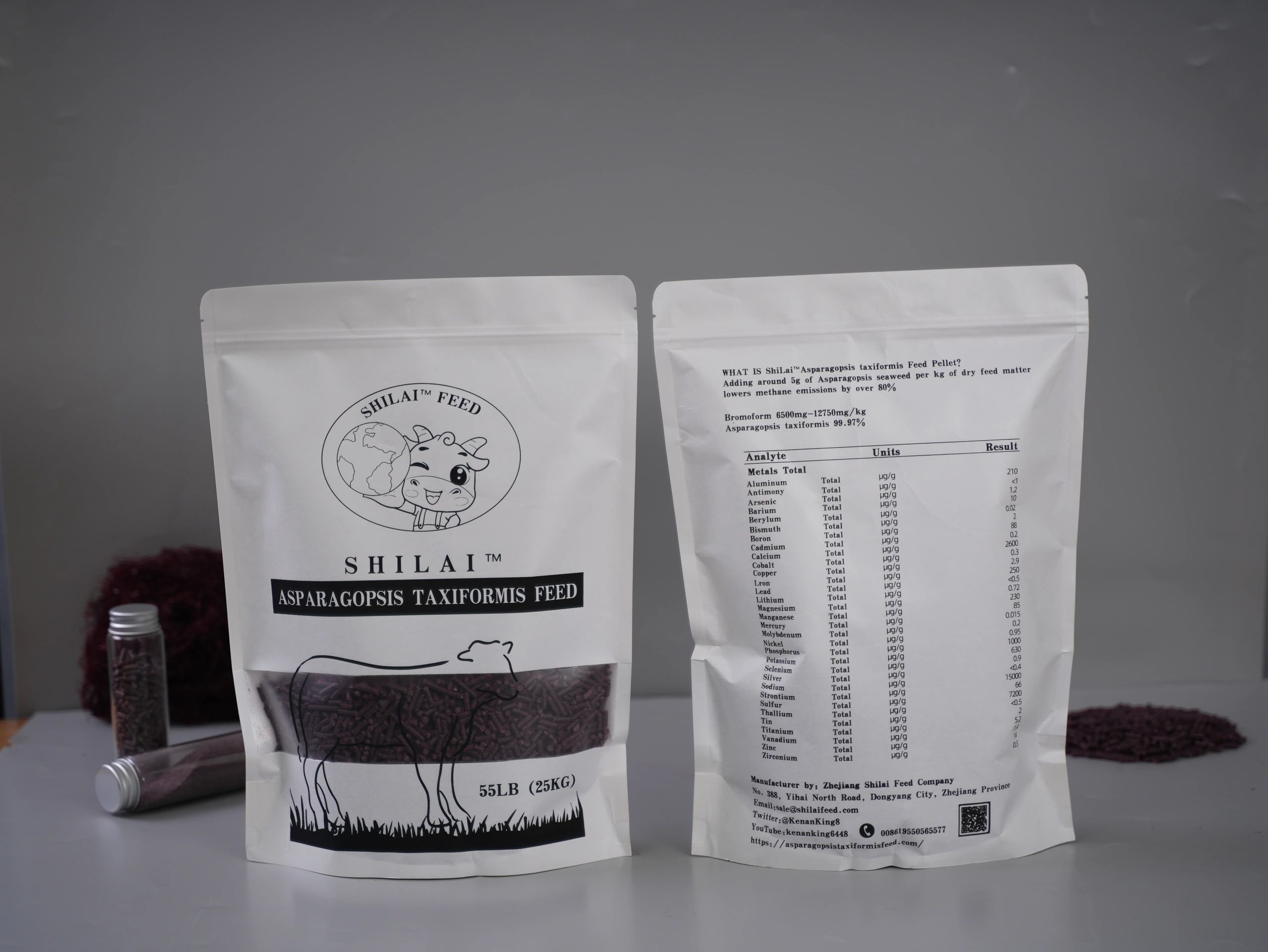
Applying Asparagopsis into Sustainable Animal Feed Formulas
The escalading demand for animal products is placing a considerable strain on global resources. This requires the exploration of innovative and sustainable solutions to mitigate the environmental impact of livestock production. Asparagopsis taxiformis, a type of red algae, has emerged as a promising solution for elevating animal feed formulas due to its uncommon nutritional profile and ability to mitigate methane emissions from livestock. Integrating Asparagopsis into animal feed can aid in creating a more environmentally responsible food system by boosting resource utilization and lessening the carbon footprint of animal agriculture.
- What’s more, Asparagopsis is a rich source of protein, vitamins, and minerals, rendering it a valuable enhancement to conventional feed rations.
- Scientific work have shown that incorporating Asparagopsis into livestock diets can noticeably diminish methane emissions, a potent greenhouse gas. This prospect makes Asparagopsis a important tool in the struggle against climate change.
Nonetheless, there are still barriers to overcome about the large-scale production and integration of Asparagopsis into animal feed formulas. Progressive research is necessary to refine cultivation methods, processing techniques, and feeding strategies to expand the benefits of this hopeful algae species.
Improving Asparagopsis Taxiformis Supplementation for Improved Animal Performance
The crimson seaweed, a red macroalgae species, has emerged as a promising feed supplement for livestock due to its elevated content of micronutrients. Studies have demonstrated that incorporating A. taxiformis asparagopsis into animal diets can positively impact various aspects of performance, including feed efficiency and intestinal microbiome. Optimizing the amount of A. taxiformis supplementation is crucial to capitalize on these benefits while minimizing potential unfavorable outcomes. Several factors, such as animal species, diet composition, and processing methods, need to be carefully analyzed when determining the optimal supplementation level of A. taxiformis for specific production systems. Further research is needed to elucidate the precise mechanisms underlying the beneficial effects of A. taxiformis supplementation and develop evidence-based guidelines for its practical implementation in animal agriculture.Evaluating Asparagopsis’s Impact on Milk Production
A recent evaluation has shed light on the considerable impact of saltwater plant Asparagopsis on dairy cattle production. Commencing findings suggest that incorporating Asparagopsis into cattle feeding regimens can significantly curtail methane emissions, a potent greenhouse gas vented by ruminant animals.
Apart from this, the study indicates that Asparagopsis may also have helpful effects on cattle robustness. Experts are currently studying the causes behind these experienced benefits, and anticipated research is predicted to provide a more comprehensive understanding of Asparagopsis's role in environmentally responsible dairy farming practices.
Asparagopsis Taxiformis: Navigating the Obstacles and Advantages in Feed Creation
Asparagopsis taxiformis, a red seaweed species with potential to revolutionize animal feed production, presents both challenges and favorable conditions. Growing this seaweed at industrial levels requires overcoming functional hurdles related to environmental protection. Furthermore, adding Asparagopsis taxiformis into animal diets necessitates careful consideration of its nutritional pattern and potential consequences on animal health and effectiveness.
Despite these complexities, the beneficial returns of Asparagopsis taxiformis in feed production are notable. Its nutrient-rich makeup and ability to mitigate greenhouse gases from livestock make it a useful alternative for a more nature-friendly food system.
- Investigations into optimizing Asparagopsis taxiformis cultivation and feed formulation are essential to unlocking its full promise.
- Joint efforts between scientists, farmers, and industry players is crucial for driving the adoption of this innovative feed ingredient.
- Buyers awareness about the benefits of Asparagopsis taxiformis in animal feed production needs to be promoted.
Advancing Animal Nutrition with Asparagopsis
As global need for animal protein soars, the search for sustainable and efficient feed solutions becomes increasingly crucial. Presenting is asparagopsis, a unique red seaweed with remarkable strengths. This innovative element holds the key to minimizing environmental impacts associated with traditional feed production while simultaneously upgrading animal health and results.
Asparagopsis boasts a high sum of essential nutrients, including protein, vitamins, and minerals. Moreover, it exhibits potent germicidal properties that can neutralize harmful pathogens in livestock, promoting strength. Moreover, asparagopsis has the remarkable ability to store large amounts of carbon dioxide during its growth cycle, contributing to a more sustainable food system.
- Developing asparagopsis is relatively easy and can be done in various surroundings, minimizing the need for usable cropland.
- Embedding asparagopsis into animal feed presents a promising strategy to address the growing question of environmental sustainability in the cattle rearing sector.
Inquiries on asparagopsis are ongoing, manifesting its full potential for revolutionizing animal feed. Via continued financing in research and development, asparagopsis is poised to become a leading element .